
Terjun dalam Kebijakan Publik
“Pada kehidupan sehari-hari, kita membentuk ide tentang orang lain dan tentang situasi sosial. Kita menginterpretasikan perilaku orang lain dan memprediksikan apa yang akan mereka lakukan apabila menghadapi sebuah situasi tertentu.” -Fritz Heider (1958), Psikolog Mempelajari psikologi berarti berusaha merasai ‘sepatu’ orang lain, menjadi diri yang penuh empati. Setidaknya itulah esensi dari empat tahun studi saya […]
‘I felt disgusted’: inside Indonesia’s fake Twitter account factories
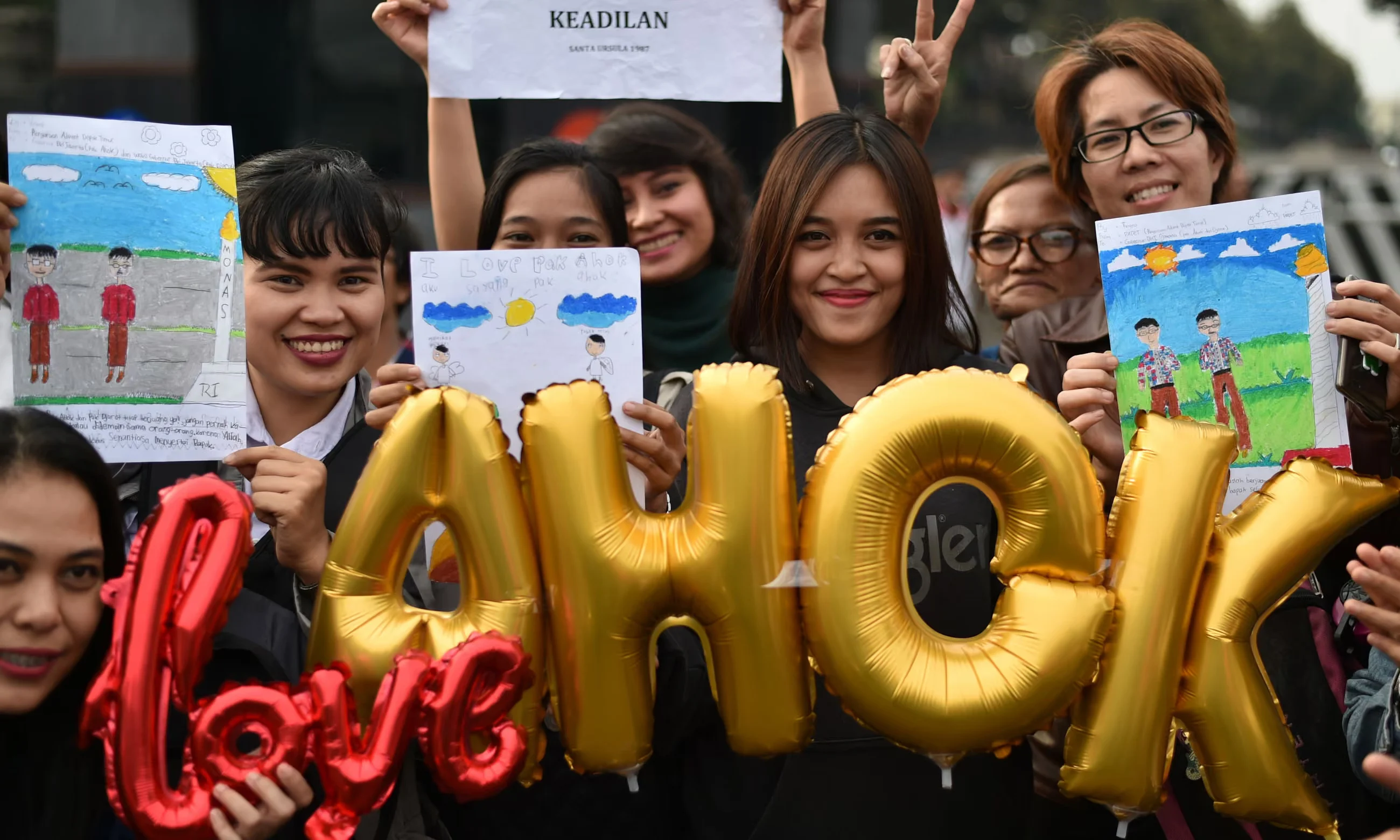
To pass them off as real, Alex would enliven his fake accounts with dashes of humanity. Mixed up among the stream of political posts, his avatars – mostly pretty young Indonesian women – would bemoan their broken hearts and post pictures of their breakfasts. But these fake accounts were not for fun; Alex and his […]
Complaining to Improve Governance
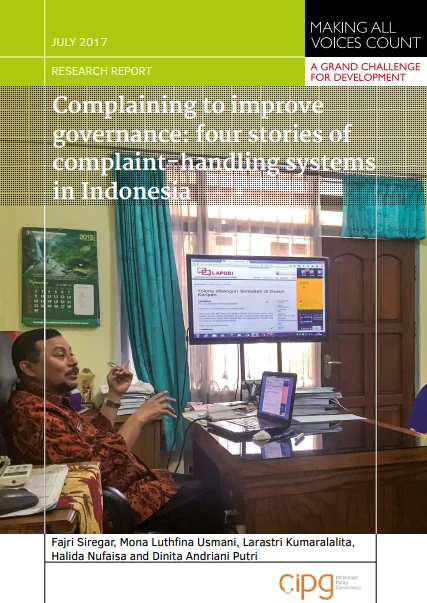
Since joining the Open Government Partnership in 2011, the Indonesian Government has shown some commitment towards implementing initiatives that increase citizen voice and government and service-providers’ accountability to citizens and service users. These include a series information and communications technology (ICT)-based complaint-handling systems that give members of the public an opportunity to highlight problems with […]
Mapping the Cyber Policy Landscape: Indonesia
Commissioned by: Global Partners Digital According to Internet Live Stats, Indonesia has 53,236,179 internet users – the 12th largest population of active internet users in the world. In terms of social media activities, Indonesia is considered highly connected and active. Today, Indonesia has the 4th largest Facebook user base and the 5th largest Twitter user […]
From Smart City to Open City: Lessons From Jakarta Smart City
Donor: The Web Foundation In 2011, Indonesia started its Open Government journey when along with seven other countries it initiated Open Government Partnership. Following the global declaration, Indonesia launched the Open Government Indonesia (OGI) in January 2012 with the aim to introduce open government reforms, including open data. This initiative is supported by Law […]
Unboxing Television in Contemporary Indonesia
“Unboxing television in contemporary Indonesia” highlights how media content, especially within television, is produced and consumed in Indonesia. The main aim is to question the logic behind TV production and to highlight how the audience shows varying degrees of autonomy in overcoming the dominance – and ignorance – of media producers.
Dari Konstituen ke Konsumen: Strategi Partai Politik di Layar Kaca
Following the Reformasi era, Indonesia held three general elections, in 1999, 2004, and 2009. During this period, political communication also underwent a shift, marked by a growing reliance on broadcasting channels and technology-based media as platforms for political campaigning. This study aims to empirically examine the communication strategies of political parties, including the actors or […]
Creating Content, Shaping Society: Do Indonesian Media Uphold the Principle of Citizenship?
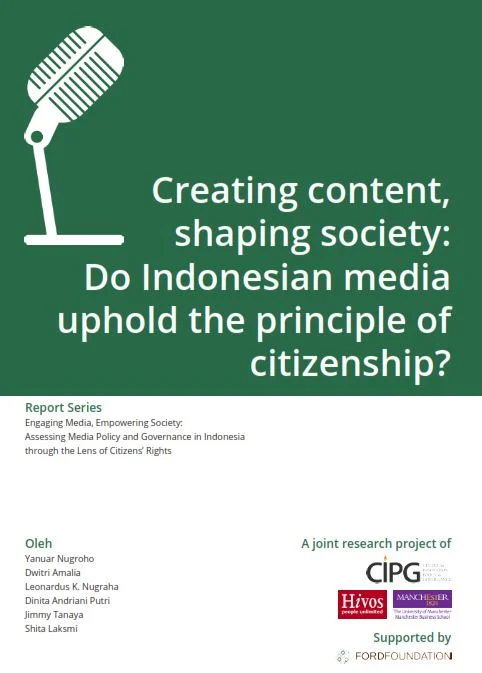
The purpose of this research is to empirically examine Indonesian media content, their workings and the factors influencing their work. It will explore the Indonesian television content, its influencing factors and its impact upon citizens. This research is part of an action research project, Engaging Media, Empowering Society: Assessing Media Policy and Governance in Indonesia […]
Warga Bicara Media: Sepuluh Cerita
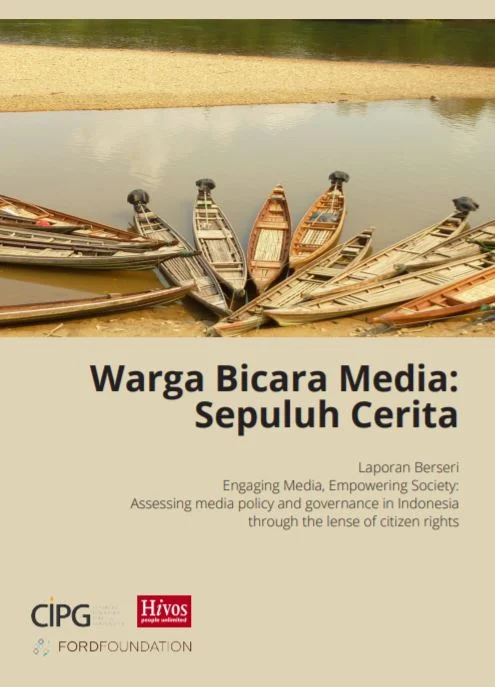
CIPG and HIVOS designed a program aimed at strengthening the credibility and capacity of civil society groups in Indonesia to conduct methodologically rigorous critical research. The program was also intended to enable these groups to engage more effectively in public decision-making processes and contribute to the protection of human rights in Indonesia. The capacity-building process […]
Media and the Vulnerable in Indonesia: Accounts from the Margins
The purpose of this research is to map the implication of the political economy dynamics of the media on citizens’ right to media from the perspective of citizens, in particular those who are vulnerable and weak(ened). By providing four case studies from vulnerable groups, we aim to map the bigger picture on citizens’ right to […]